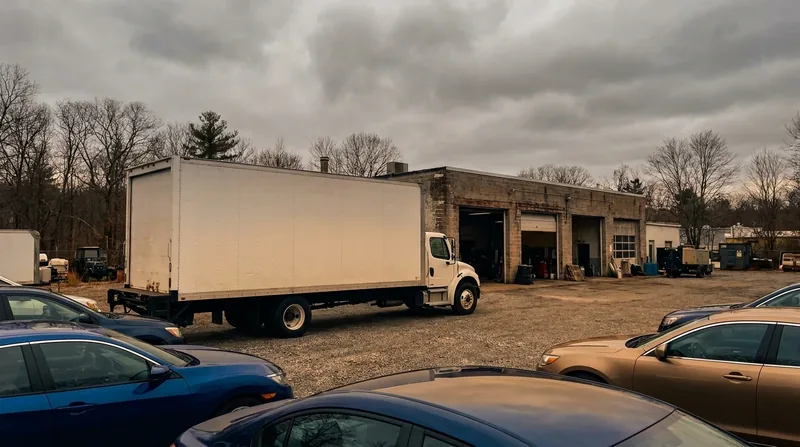
How to Start a Car, Moped or E-Bike Rental Business in Hawaii: $7.50 a Day Rental Vehicle Surcharge in 2026, Moped Exclusion and the 2026 E-Bike Law
How to Start a Car, Moped or E-Bike Rental Business in Hawaii: $7.50 a Day Rental Vehicle Surcharge in 2026, Moped Exclusion and the 2026 E-Bike Law
Knowing how to start a car rental business in Hawaii means planning for two cost layers that many mainland owners never face. Hawaii has no sales tax, so the General Excise Tax (GET) is levied on your gross receipts as the business. On top of that, rental motor vehicles carry a state surcharge of $7.50 a day in 2026. Mopeds are excluded from that surcharge, and a new e-bike law signed July 15, 2026 affects what you can rent and how you set up your fleet.
This guide covers the steps in the order most owners take them: choosing a structure, registering with the state, getting your GET license, handling the rental surcharge, choosing a fleet, and staying compliant. It is informational content, not legal or tax advice. Confirm every item marked for confirmation with the named agency, and talk to a qualified attorney or CPA before you sign a lease, buy vehicles or pick a structure.
What You Need Before You Start
Gather these items before you file. A missing item is the most common reason a filing stalls.
- A business name that meets state rules. An LLC name must contain the words Limited Liability Company, the abbreviation L.L.C. or the abbreviation LLC. Limited may be abbreviated as Ltd. and Company as Co. Check availability for free with the BREG business name search at https://hbe.dcca.hawaii.gov/search-and-buy.
- A registered agent with a complete Hawaii street address. The agent must be an individual or entity authorized to transact business in Hawaii and physically present in the state. An LLC cannot be its own registered agent. A commercial registered agent files a listing statement with BREG for $100.00.
- Your formation document: Articles of Organization (Form LLC-1) for an LLC, or Articles of Incorporation (Form DC-1) for a corporation.
- A Hawaii Business Express (HBE) account at https://hbe.dcca.hawaii.gov/.
- A federal Employer Identification Number (EIN) from the IRS, which you will likely need for banking and payroll.
- A fleet list showing the make, model, VIN, vehicle type (car, van, moped, e-bike or tour vehicle) and seat count for each unit.
- A separate business bank account and bookkeeping software, so your GET and surcharge records are easy to pull at filing time.
- Written quotes for vehicle and liability coverage from an insurer or broker who handles rental fleets.
Budget the fixed state costs now: $50.00 for a formation filing, $12.50 for each annual report, and $20.00 for the GET license. Name reservation ($10.00, held for 120 days) and trade name registration are optional, depending on your structure.
Step 1: Choose Your Legal Structure
Your structure sets the filings, the annual reports and how your personal assets are separated from business debts. Many small rental owners choose an LLC for that separation, but the protection depends on how you actually run the company. Hawaii has no franchise tax on LLCs. Corporations pay the graduated corporate income tax on Form N-30: 4.4 percent on taxable income not over $25,000, 5.4 percent on income over $25,000 but not over $100,000 (less $250), and 6.4 percent on income over $100,000. Net capital gains are taxed at an alternative 4 percent rate. Ask a CPA which structure fits your plans.
| Filing | State fee | What to know |
|---|---|---|
| LLC Articles of Organization (Form LLC-1) | $50.00 | Annual report of $12.50 each year, starting the year after registration |
| Corporation Articles of Incorporation (Form DC-1) | $50.00 | Annual report of $12.50 each year, starting the year after registration |
| Name reservation | $10.00 | Holds the name for 120 days |
| Trade name registration (Form T-1) | $50.00 plus a $1.00 State Archives fee | Optional $20.00 expedited fee. Valid for five years. The Department does not send renewal notices. |
Step 2: Register Through Hawaii Business Express
Start with the free name search at BREG (https://cca.hawaii.gov/breg/). If you need time to finish your paperwork, reserve the name for $10.00. Then name your registered agent and file your formation document online through Hawaii Business Express at https://hbe.dcca.hawaii.gov/. The division describes online filing as the most efficient method. The state moved to a new registration portal on July 6, 2026, so check the BREG site for current instructions before you file.
Plan around processing time, not a promised date. BREG does not publish a standard turnaround for routine filings. Expedited review normally costs an extra $25.00 per document, but BREG states that expedited processing is not available at this time. Do not sign a vehicle lease or buy a fleet with a fixed start date that depends on an approval you have not yet received.
If you operate as a sole proprietor under a name other than your own, file a trade name registration (Form T-1) at https://cca.hawaii.gov/breg/registration/trade/. Hawaii has no county-level DBA filing.
Step 3: Get Your General Excise Tax License
Hawaii has no general statewide business license and no county general business license. Registering an entity or a trade name is a filing, not a license. The one universal state registration is the GET license. It costs a one-time $20.00 and is applied for on Form BB-1 or through Hawaii Tax Online at https://tax.hawaii.gov/. Processing is immediate in person, 5 to 7 business days through Hawaii Tax Online, and 4 to 6 weeks by mail. The license stays active until you close, surrender or lose it.
GET is levied on the business, not the customer. Rents are taxed at the 4.0 percent state rate plus the 0.5 percent county surcharge, for 4.5 percent in total. Confirm the current rate table at https://tax.hawaii.gov/get/. Every license holder must file periodic and annual returns, even in a period with no income. If you show GET as a separate line on customer invoices, the maximum pass-on rate is 4.7120 percent. Do not describe it as sales tax on your invoices or website, because Hawaii has no sales tax.
Step 4: Handle the Rental Motor Vehicle Surcharge
Under HRS 251-2(a), the rental motor vehicle surcharge is $5.00 a day or portion of a day, plus $0.50 added each January 1 from 2022 through 2027. That brings the rate to $7.50 a day in 2026 and $8.00 a day in 2027. As a sample calculation, a three-day rental at the 2026 rate carries $22.50 in surcharge (3 times $7.50). The surcharge is levied on you as the lessor, not on the renter.
Replacement vehicles are not subject to the surcharge when they are provided while a lessee's vehicle is being repaired, or after it has been stolen or totaled. Keep records of those replacements for two years. Peer-to-peer car sharing programs under chapter 279L are subject to the surcharge.
Before your first rental, confirm the reporting forms, filing frequency and remittance method with the Department of Taxation at https://tax.hawaii.gov/. This guide does not set those mechanics, so do not assume them.
Step 5: Choose Your Fleet
Each vehicle type is treated differently, so decide your fleet mix before you price your rentals.
| Vehicle | Rental surcharge | GET | What to do |
|---|---|---|---|
| Car | Applies: $7.50 a day in 2026 | Applies | Price the surcharge into your records and invoices |
| Moped | Excluded under HRS 251-1 (moped as defined in HRS 286-2) | Applies | Also check county moped rental rules |
| E-bike | Confirm with the Department of Taxation | Applies | Check county rules and Act 259 requirements |
| Heavy cargo truck with barrier, or two-seat cargo van | Excluded under HRS 251-1 | Applies | Keep the barrier and seating documentation |
| Tour vehicle | Separate tour vehicle surcharge on the operator: $66 a month per vehicle over 25 seats, $16 a month for 8 to 25 seats | Applies | Track seat counts for each vehicle |
Mopeds. The surcharge excludes mopeds, so a moped rental does not add the daily surcharge. It still generates GET, so price moped rentals with that tax in mind. Check the county planning and public works or licensing offices for any county moped rental rules that apply on your island.
E-bikes. Act 259 (HB 2021) was signed July 15, 2026, and took effect on signing. It sets rules for Class 1, 2 and 3 e-bikes, and it bans high-speed electric devices (over 750 watts or 28 mph) from public roads and paths. Riders under 18 must wear helmets. The act also requires registration and class, speed and wattage labels. Before you rent an e-bike, match each unit to its class, confirm its labels and ask the county how the registration rules apply to rental units. Whether e-bikes fall under the rental surcharge is a question to confirm with the Department of Taxation, and any rental-specific e-bike rules should be confirmed with your county.
Tour vehicles. If you carry passengers on tours, the tour vehicle surcharge is levied on the operator. The rate is $66 a month per vehicle over 25 seats and $16 a month for 8 to 25 seats (HRS 251-2(b)). Keep seat counts documented for each vehicle so you can show which rate applies.
Step 6: Check County and Zoning Requirements
Hawaii has four counties: Honolulu, Hawaii, Maui and Kauai. It has no incorporated cities. There is no county general business license, but counties still matter for zoning, parking and vehicle staging. Before you lease a lot or storefront, confirm with the county planning department that your use is allowed at that address. If you sell food or drinks at a location, the state Department of Health issues food permits, because there is no county health department. If your business includes a service that a DCCA Professional and Vocational Licensing board regulates, check that separately.
Step 7: Set Up Employees, Insurance and Records
If you hire employees, you must follow the Prepaid Health Care Act. Have your CPA or attorney walk you through the employer obligations before your first hire.
Ask your insurer whether each vehicle type is covered under the policy you buy. Coverage for mopeds, e-bikes and tour vehicles can differ from coverage for cars, so get separate written confirmation for each type.
Keep these records: rental logs, surcharge calculations, GET returns, invoices, and replacement-vehicle records for at least two years. Good records make the periodic GET returns and any surcharge reporting far easier.
Step 8: Calendar Your Annual Compliance
The annual report is due by the end of the calendar quarter that matches the quarter you registered. No report is required in the year you register.
| Registered between | Annual report due |
|---|---|
| January 1 to March 31 | March 31 |
| April 1 to June 30 | June 30 |
| July 1 to September 30 | September 30 |
| October 1 to December 31 | December 31 |
Also calendar your GET returns, your surcharge filings and your trade name renewal, which is due every five years.
Tips and Common Mistakes to Avoid
- Calling GET sales tax. Hawaii has no sales tax, and GET is the business's tax.
- Applying the surcharge to moped rentals, or leaving it off car rentals. Set up your booking system by vehicle type from day one.
- Assuming the e-bike law answers every rental question. It does not. Confirm the surcharge treatment with the Department of Taxation and the rental rules with your county.
- Naming an LLC without LLC in the name. The name must contain Limited Liability Company, L.L.C. or LLC.
- Naming an agent who is not physically in Hawaii, or naming the LLC as its own agent. Both are problems under the registered agent rules.
- Missing the annual report. The $12.50 fee is small, but the quarter-based deadline is easy to forget.
- Planning around expedited filing. BREG states that expedited processing is not currently available.
- Letting a trade name lapse. Registration is valid for five years, and the Department does not send reminders.
- Discarding replacement-vehicle records early. Keep them for two years.
Expected Results
Owners who work through these steps before buying a fleet may reduce the risk of late filings, unexpected tax bills and costly rework. Results will vary with your location, fleet mix, pricing and demand, and no particular outcome is guaranteed. Filing and processing times can change, so check the current agency pages before you rely on any date.
Official Resources
- Department of Commerce and Consumer Affairs, Business Registration Division: https://cca.hawaii.gov/breg/
- Hawaii Business Express: https://hbe.dcca.hawaii.gov/
- BREG business name search: https://hbe.dcca.hawaii.gov/search-and-buy
- Trade name registration: https://cca.hawaii.gov/breg/registration/trade/
- BREG frequently asked questions (name reservation): https://cca.hawaii.gov/breg/faqs/
- Hawaii Department of Taxation: https://tax.hawaii.gov/
- General Excise Tax information: https://tax.hawaii.gov/get/
- Hawaii Small Business Development Center: https://hisbdc.org/
- SBA Hawaii District Office: https://www.sba.gov/district/hawaii
Disclaimer: This article is informational content, not legal, tax or insurance advice. Hawaii rules, rates and processing times change. Confirm current requirements with the agencies named above, and consult a qualified attorney and a CPA before you form your entity, sign a lease or set your rental pricing.
Keep exploring: related Hawaii guides
- How to Start a Car Dealership or Auto Repair Shop in Hawaii
- How to Start a Courier and Delivery Business in Hawaii
- How to Start a Towing Business in Hawaii
- How to Start an LLC in Hawaii
- Hawaii Business License
- How Much Does It Cost to Start a Business in Hawaii
- All Hawaii business types
- Every Hawaii guide in one place