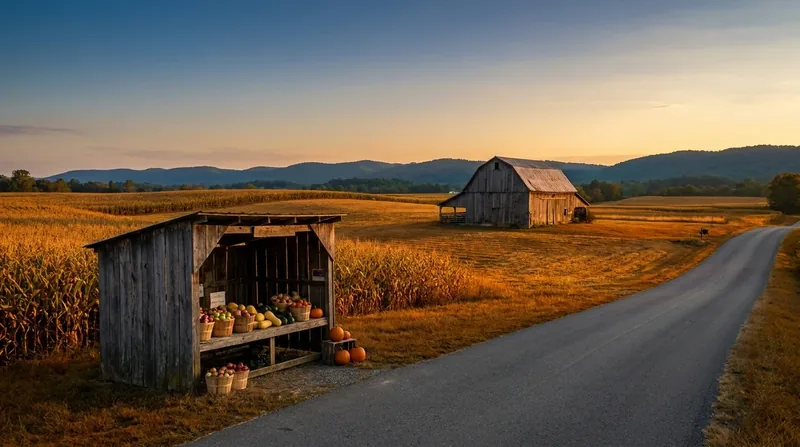
How to Start a Farm in Hawaii: Ag District Rules, Producer GET Treatment and Department of Agriculture and Biosecurity Farm Loans
How to Start a Farm in Hawaii: Ag District Rules, Producer GET Treatment and Department of Agriculture and Biosecurity Farm Loans
Learning how to start a farm business in Hawaii is mostly about sequencing. Land use comes first, because the parcel you farm determines what you can build and sell. After that you form your business entity, register for the General Excise Tax (GET) license, check any food or product permits, meet crop and livestock rules, and only then look at financing. This guide walks through that order with the fees, agencies, and deadlines verified as of October 2026.
Disclaimer: This article is informational content, not legal or tax advice. Fees, rates, and rules change, so confirm every figure with the named agency before you file or pay. For complex situations, such as leasing agricultural land, structuring ownership with partners, or choosing a tax treatment, talk with a qualified attorney or CPA.
What You Need Before You Start
Gather these items before you file anything. Most delays come from missing land documents, not from the state paperwork itself.
- Proof of land access: a deed, a lease, or a written landowner agreement that allows farming and farm buildings on the parcel
- The parcel's tax map key number and zoning designation, which you can get from the county planning department
- The names and addresses of each owner, member, or officer
- Two or three proposed business names, checked in advance with the free BREG business name search
- A written production plan covering crops or livestock, acreage, sales channels (farmers markets, wholesale, direct to consumers, or sales to out-of-state buyers), and any processing you plan to do
- A startup budget that covers filing fees, equipment, water, insurance, and several months of operating costs
Step 1: Confirm Your Land Allows a Farm
Hawaii places land in state land use districts, and agricultural land is where most farms operate. HRS 205-4.5(a) lists the uses permitted in the agricultural district, including farm dwellings, employee housing, and farm buildings. That list is the starting point, not the finish line. Subdivision, zoning, and building rules are set at the county level, and Hawaii has four counties (Honolulu, Hawaii, Maui, and Kauai) and no incorporated cities. Confirm your requirements with the planning department for your county before you buy equipment or put up structures.
Use this checklist before you sign a lease or purchase agreement:
- Confirm the district designation for the parcel's tax map key number.
- Ask the county planning department whether a farm dwelling, employee housing unit, packing shed, or other building needs a separate permit.
- Ask whether on-site retail sales or processing need separate approval. A use that appears in the statute may still require county approval for the specific activity.
Step 2: Choose and Form Your Business Entity
You can farm as a sole proprietor, but many farm operators choose an LLC to separate business and personal liability. A corporation is the other common option. Both are filed with the Business Registration Division (BREG) of the Department of Commerce and Consumer Affairs (DCCA). Hawaii has no franchise tax on LLCs, and every registered entity must name a registered agent.
LLC filing
- Filing fee: $50 plus a $1.00 State Archives fee, using Articles of Organization for Limited Liability Company (Form LLC-1)
- Name: must contain Limited Liability Company, LLC, or L.L.C. You may abbreviate Limited as Ltd. and Company as Co. The name cannot be substantially identical to a name already registered, under Section 428-105, HRS and Section 16-36-15, Hawaii Administrative Rules.
- Registered agent: must be an individual or entity authorized to transact business in Hawaii and physically present in the State. The Articles must state the agent's complete Hawaii street address. An LLC cannot be its own registered agent (Sections 428-107 and 425R-4, HRS). Commercial registered agents file a listing statement with BREG for $100.00.
- Name reservation: $10 for 120 days, if you need to hold a name while you prepare your filing
Corporation filing
A corporation files Articles of Incorporation (Form DC-1) for the same $50 filing fee plus the $1.00 State Archives fee. Corporations also file an annual report with a $12.50 fee. Corporate income tax is graduated on Form N-30, so discuss the entity choice with a CPA before you commit.
Filing and processing
File online through Hawaii Business Express at https://hbe.dcca.hawaii.gov/. BREG describes online filing as the most efficient method. BREG does not publish a standard turnaround time for routine filings. Expedited review normally costs an extra $25.00 per document, but BREG states that expedited processing is not available at this time following the July 6, 2026 move to its new registration system. Plan for routine processing and budget time accordingly. General information is on the BREG page at https://cca.hawaii.gov/breg/.
Trade name registration (if needed)
If you sell under a name different from your registered entity name, register a trade name on Form T-1. The fee is $50.00 plus a $1.00 State Archives preservation fee. A registration is valid for five years, and the Department does not send renewal notices, so calendar the renewal yourself. Hawaii has no county-level DBA filing. A trade name registration is a filing, not a license. Details are at https://cca.hawaii.gov/breg/registration/trade/.
Step 3: Register for the General Excise Tax License
Hawaii has no general business license at the state or county level. The one universal state registration is the General Excise Tax (GET) license, a one-time $20 fee. It stays active until you close, surrender, or lose it. The DCCA Business Action Center states that persons doing business in Hawaii must obtain one. Apply on Form BB-1 or through Hawaii Tax Online. Processing is immediate in person, 5 to 7 business days through Hawaii Tax Online, and 4 to 6 weeks by mail. Start at https://tax.hawaii.gov/get/.
Hawaii has no sales tax. The GET is a tax on your gross receipts as the seller, not a tax billed to the customer. Your rate depends on the type of activity:
| Activity | GET rate |
|---|---|
| Retail sales (4.0% state rate plus 0.5% county surcharge) | 4.5% |
| Wholesaling | 0.5% |
| Producer sales, other than sales to an out-of-state processor | 0.5% |
| Sale of agricultural products to a purchaser who will process them outside the State | No GET on that sale (HRS 237-13(2)(D)) |
How each sale is classified is the part most farms get wrong. Direct-to-consumer sales, value-added products, and agritourism income may fall under different rates than wholesale produce. Confirm your classification with the Department of Taxation at https://tax.hawaii.gov/ before you set prices. Keep records showing the buyer and where the product will be processed, because the out-of-state exemption depends on that. Every GET license holder must file periodic and annual returns, even in a period with no income.
Step 4: Clear Food, Alcohol, and Employee Requirements
If you make or package food, such as jams, sauces, dried products, or prepared items, the Hawaii Department of Health issues food permits. Because Hawaii has no county health department, the state agency is the one to contact. Confirm the permit type for your specific product with DOH before you sell it to the public.
If you make wine, cider, or other alcoholic products, contact your county liquor commission. Separate professional and vocational licenses, county permits, and industry permits may also apply, so ask each agency what your operation triggers.
If you hire employees, employers must follow the Prepaid Health Care Act. Check your obligations with the Department of Labor and Industrial Relations before your first payroll.
Step 5: Check Crop, Livestock, and Aquaculture Rules
Several commodities have their own rules that apply regardless of your entity or GET status:
- Honey bees and used bee equipment: cannot be imported unless certified pest-free (HRS 150A-6(4)). Build this into your bee purchase plans before you order.
- Aquaculture: requires a license from the DLNR Division of Aquatic Resources under HAR chapter 13-74. Check current fees with DLNR, because they are not set out here.
- Macadamia, cacao, taro, and cattle: each has crop-specific or livestock-specific requirements. Check with the Department of Agriculture and Biosecurity, formerly HDOA, which was renamed under Act 236 of 2025.
Step 6: Apply for Farm Loans Only After Private Lenders Say No
The Agricultural Loan Division of the Department of Agriculture and Biosecurity is a lender of last resort. Apply only after private lenders have denied your credit request, and have those written denials ready. Reach the Division at (808) 973-9460. It has offices on Oahu, in Hilo, and in Kona.
The Division offers several programs:
- New Farmer loans
- Qualified Farmer loans
- Part-time Farmer loans
- Emergency loans
Interest rates are set under HAR chapter 4-8. Proposed 2026 amendments would set a flat 4%, or 3% for new farmers. Because those figures are proposals, ask the Division which rate applies to you today rather than building your budget on either number.
Step 7: Calendar Your Annual Compliance
An LLC or corporation must file an annual report with a $12.50 fee. It is due by the end of the calendar quarter in which the entity registered. You do not file a report in the same year you registered.
| Entity registered between | Annual report due |
|---|---|
| January 1 to March 31 | March 31 |
| April 1 to June 30 | June 30 |
| July 1 to September 30 | September 30 |
| October 1 to December 31 | December 31 |
Put your GET return deadlines on the same calendar. Check the schedule for your license with the Department of Taxation, since returns run separately from the annual report.
Common Mistakes to Avoid
- Buying land or signing a lease before checking the district and county zoning. Fix this first, because it is the hardest problem to undo.
- Assuming a name is available because it sounds different. Run every proposed name through the BREG search, and remember the LLC name must contain an LLC designator.
- Treating a trade name registration as a license. It is a filing. You still need the GET license.
- Skipping GET returns during slow months. Returns are required even when you have no income.
- Applying for a state farm loan before a private lender has declined you. The Division is a lender of last resort.
- Importing honey bees or used bee equipment without pest-free certification.
- Assuming every sale to a buyer is exempt. The out-of-state processing exemption applies only to qualifying sales, so document each one.
- Planning around expedited filing. BREG states expedited processing is not available at this time.
Expected Results
Your results depend on your land, crops, markets, and management, so treat the points below as planning expectations, not promises. Once your entity is registered and your GET license is issued, you may be able to begin selling, subject to any permits your product needs. Online GET processing typically takes 5 to 7 business days, and BREG does not publish a standard turnaround for routine filings. A loan decision, if you pursue one, depends on the Division's review of your application.
If you sell food or other products, avoid disease claims entirely, and check FDA labeling rules before using any health-related wording on packaging or in marketing. Describe your products factually, and be cautious with any claim that goes beyond taste, origin, or growing method.
Next Steps and Resources
Start with the land checks in Step 1, then file your entity and GET registration, and build your permit and loan timeline from there. The Hawaii Small Business Development Center offers free business advising at https://hisbdc.org/, and the SBA's Hawaii district page is at https://www.sba.gov/district/hawaii. For leases, ownership structure, and tax treatment, consult a qualified attorney or CPA. This article is informational only and is not legal or tax advice.